
Tyra
Banks, you fierce, beautiful business tycoon you, thank you for the many
writing lessons that binge watching past cycles of America’s Next Top Model provides. At first, I thought my love of
your show was fever induced, but in spite of my husband’s teasing, it turns out
that those hours spent in front of the screen provided some much needed
instruction in how to be a successful artist.

1.
It’s
Not Enough To Be Pretty
It
seems that every season, there’s at least one girl who takes gorgeous photos
but as the episodes unfold, the judges become bored by her. “It’s not enough to
be a pretty face,” Nigel will say. The panel nods in agreement. At
first it seemed like such a ridiculous statement. Of course it’s about being
pretty. It’s modeling, for goodness’ sake.

You,
Tyra, made me understand. You claim that one of the purposes of your show is to
expand what beauty means, and I believe you are in fact much harder on
traditionally pretty girls than you are on the more exotic ones. Because it’s
not enough to be pretty. As Mr. Jay often says, you’ve got to bring it.
Bring
what? Ah, there it is. The Je ne sais
quoi of the whole show, the thing that makes each cycle new and exciting.
It’s impossible to say what an artist must bring to her art. Passion? Certainly.
Craft, commitment, joy? Yes, yes, yes. Yet even these things are not enough.
When a girl is successful it’s because she brings something unexpected,
something unique, something that even the judges are hard pressed to
articulate. Is each winner pretty? Undoubtedly. Outside of the narrow
strictures of beauty, though, they are also something more. More is what makes them
stand out.
Writing
is no different. There is an intangible element to what makes a piece of
writing successful that all the lessons on craft and marketing can’t quite
contain. What is it? Je ne sais quoi,
exactly, but like the judges, I know it when I see it. America’s Next Top Model reminds me that pretty writing isn’t good
enough. I’ve got to bring it. Work it. Own it.
2.
It’s
All In The Details
Still,
of course the models are all pretty. It’s a given of the industry. Just as
being able to pose, knowing one’s angles, and having a signature runway walk
are also expected. The building blocks to becoming a successful model are
understood by all the contestants, and when one is weak in a particular area,
the price is often being sent home.
“Stop
posing!” Jay will shout at one of the girls during a photo shoot. She gives him a confused look. I’m
confused, too. Aren’t models supposed to pose?

“Beautiful
picture but there’s nothing in the eyes,” one of the judges will say during
panel. Isn’t a beautiful picture the point of modeling?
Once
again Tyra comes to the rescue. She gets up and shows how a subtle angling of
the hips, a narrowing of the eyes, or a slight shift of weight changes a
pose into a statement, an emotion, a space where the model and viewer connect.
“Smile
with your eyes,” she often says. There’s a thing she does, a wide-open squint,that
makes a picture come alive.
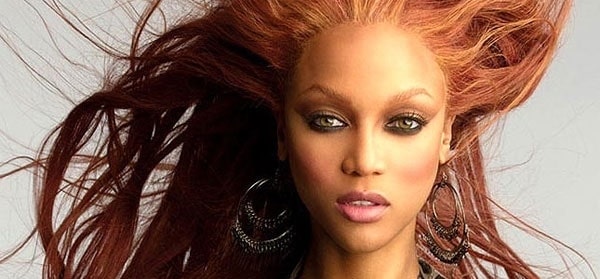
The difference then is that poses are stagnant, but dynamic engagement in the process creates art. Yes,
the basics are important. Every model must master them. But it’s the details
that make her memorable.
Writers
must master the basics of craft, too. Sentence and story structure, point of
view, dialogue, setting, pacing, tension, all the building blocks of story
telling must be solid. If not, the writing will never be published. However,
the basics aren’t enough. Stories can’t look posed, either--that is, the parts in all the correct places but lacking the presence, depth, and heart that true engagement brings to a piece. The writer needs to be
attentive to exquisite details, to the small moments that elevate craft to art.
3.
Commit
The
worst photo shoots come from models who don’t fully commit to the moment. They
go through the motions, throw out poses, stare off at the horizon, but they
never quite go all the way. Don’t snarl with your lips––growl! The snarl will
come with it. Don’t open your mouth in a silent scream––let it out! Pretending
and doing are two different things.

When I
look at my writing, I have to consider: is this real? Or am I pretending on the
page? Writing that’s real has emotional resonance. Pretend writing looks pretty
on the page but is quickly forgotten.
One of
the biggest criticisms I got of my first book (which didn’t sell) is that it
was too melodramatic. When I got the idea for Fancy White Trash, I remember
thinking, melodramatic? I’ll show you melodramatic. Instead of shying away from
my love of soap opera-like drama, I fully embraced it. The lesson I learned was
not to straddle the fence. Whatever a piece of writing wants to be, push it as
far as it will go.
Just as
a viewer can tell when a model is faking emotion, so too can a reader detect
falseness in writing.
4.
It
Takes A Team
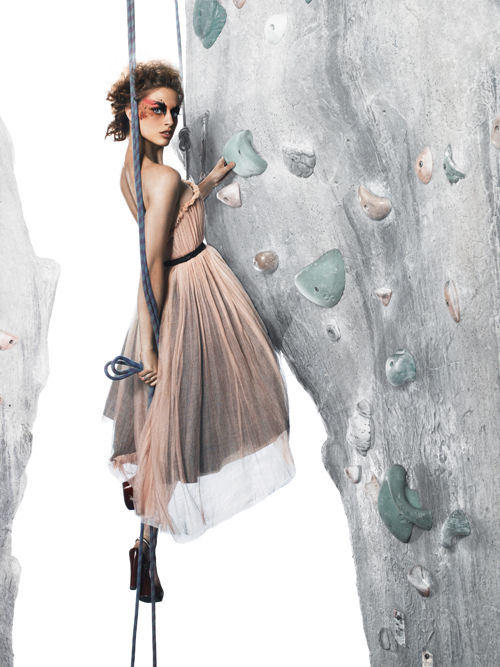
Many of
the girls who compete on America’s Next
Top Model don’t seem all that exceptional looking at first. Then, bam, put
a girl through hair and make-up, give her a couture gown, hang her off a cliff, and damn, you’ve got
a super model. The girl had it in her the whole time, but sometimes she needs
help reaching her full potential.
Tyra
has a particularly good eye for hair. Famously, at least one model cries during
the make-over episode when Tyra has the model’s hair chopped off or changes the
color. Invariably, though, the changes make the girl more “modelesque,” as they
say on the show. There is often discussion of the difference between being
commercial and couture. A model can be commercially pretty but not have that
extra oomph that makes her couture.
In
writing, I think writers are often happy when the writing is good enough. It’s
pretty, marketable, and my critique group loves it. However, those things don’t
make it publishable. Sometimes, a writer needs a team—like a mentor, an agent,
an editor, or sometimes all three––to take the writing to the next level.
It’s hard to see ourselves as we really are. An outside eye can help push us
further than we can go on our own.
When
Bianca had to shave her entire head because of all the damage to her hair, she
cried. She thought she was beautiful coming into the competition. Who was she
without her hair? It was a difficult transition for her, but eventually she saw
what was obvious to the audience as soon as her hair was gone: the new cut
emphasized her incredible bone structure and striking smile.

Revision
can be like a traumatic make-over. It can feel like the editor is picking on
the thing that you feel defines the piece. Go ahead and cry. But then shave
your manuscript down. Maybe there’s something more beautiful under all the
camouflage you created. Don’t be satisfied with commercial. Always strive for
couture.
5.
You’ve
Got To Want It
Season
after season, girls confess to the camera how much they want to be America’s
Next Top Model. As the seasons unfold, though, it becomes clear that not
everyone wants it enough. Home life, self esteem, conflict in the house,
depression, illness, redefining life goals—all these things often get in the
way of a model doing her best.
Tyra,
you are such a goddess. When a girl talks about a death back home or how ill
she was during a shoot, you are all compassion and heart. Then, you point out
the bottom line. A model’s job is to deliver. You counsel compartmentalizing.
Feel your feelings, then put them away. Get the job done.
As a
writer, it is so easy to be distracted by life. Constant pulls on my attention,
my time, my health, and my bank account often make me question whether I should
be writing at all. So, Tyra, thanks for the advice. Deal with it. Put it away.
Deliver. I can do that. Because you know what? I do want it.
6.
Attitude
But it’s not
enough to want it. You’ve got to really
want it. Don’t hope. Don’t expect. Work for it. Models get eliminated from the
show because of attitude problems more than any other reason. Here’s the advice
I’ve compiled from watching girl after girl get sent home:
a.
Don’t be over it. Show the judges that you’re committed and even though set
backs come your way, you won’t give up. When the judges feel like you’ve given
up, they give up on you, too.
b.
Don’t be conceited. The world doesn’t owe you anything. You’re not better than
everyone else. The judges are in a position to help you. Don’t alienate them
with a sense of entitlement.

c. Don’t be fake. You are the only one who can
do this. Show the judges who you are. When others connect with you, they want
to help you.
d.
Be grateful.
e.
Be charming.
f. Don't let others bring you down. Stay above the fray. Sure, it's a competition, but if you stay focused on doing your best, the rest will sort itself out.
f. Don't let others bring you down. Stay above the fray. Sure, it's a competition, but if you stay focused on doing your best, the rest will sort itself out.
For writers,
yeah. All of the above. Substitute the word editors for judges, and no more
explanation is necessary.
7.
Know
Who You Are
Some girls get
on the show, hoping that becoming America’s Next Top Model will be their
identity. These girls are never successful. When such a girl is in the bottom
two but given one more chance, Tyra will caution her, “The judges say they
don’t know who you are.”
It can be easy
in writing to mimic those writers and genres we admire, but with enough
practice, eventually your own writing voice emerges. Don’t be satisfied with
sounding like someone else. Keep writing until you are the only person who
could write what you’re writing.
Tyra also tells
her contestants to study themselves. Know what makes you unique. When you know
the ways in which you are different from your competition, you are better able
to highlight those features and abilities.
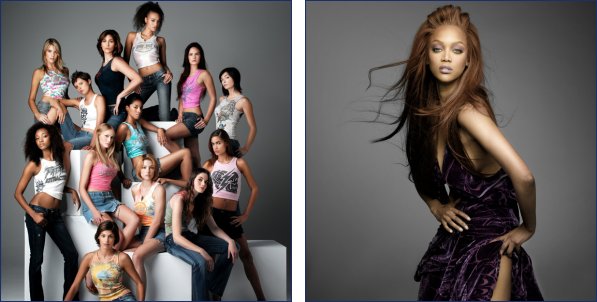
At the end of
the day, the winner isn’t the best. There are many beautiful women who could be
America’s Next Top Model. There are many amazing writers whose work deserves
publication. The main lesson I’ve learned from America’s Next Top Model is that there is no such thing as the
best. The winner is the last one standing.
Thank
you, Tyra, for showing me what it takes to be the last one standing. I may not
get a contract with Elite modeling, a spread in Seventeen magazine, or a $100,000 Cover Girl contract, but I did
get enough inspiration to keep writing for another year.
